
The Ultimate St. John Travel Guide: Everything to Know Before You Go
Plan a St. John vacation with current advice on ferries, beaches, rental Jeeps, where to stay, seasonal closures and island etiquette.
· 4 min read · The Drifters Team
St. John is not a conventional resort island. It has no commercial airport, large sections of the island are protected by Virgin Islands National Park, the roads are steep, and most trips begin with a flight to St. Thomas followed by a ferry.
That extra logistics layer is not a reason to avoid St. John. It is the reason a small amount of planning produces a much better trip.
How to get to St. John
Most visitors fly into Cyril E. King Airport on St. Thomas, airport code STT, then take a taxi to a ferry terminal.
Red Hook to Cruz Bay
Red Hook provides the most frequent passenger-ferry service, with departures roughly every hour, daily, year-round. The crossing is approximately 20 minutes. One-way fares are $6 for a resident adult, $8.15 for a non-resident adult, $1.50 for a VI senior, $1 per child, free for infants, plus a $4 bag fee per piece.
Charlotte Amalie and Crown Bay to Cruz Bay
The Charlotte Amalie–Cruz Bay ferry is seasonal, generally running November through May with three departures daily and a crossing of about 45 minutes. One-way fares are $12 for a resident adult, $13 for a non-resident adult, $6 for a VI senior, $3.50 per child, free for infants, plus a $4 bag fee. It is closer to the airport than Red Hook and useful if you are staying in town or arriving by cruise ship, but Red Hook remains the more frequent option year-round. Crown Bay, just outside Charlotte Amalie, also sees limited private ferry service.
Getting from the airport to the ferry
Taxis at STT are shared, rate-regulated, and priced per person. Expect roughly 30–45 minutes to Red Hook depending on traffic through Charlotte Amalie, or about 10–15 minutes to Crown Bay. Build in a buffer: missing the last convenient ferry is the most common arrival-day mistake.
If you are shopping for groceries on St. Thomas — one of the biggest money savers of the trip — do it between the airport and the ferry. See St. John on a budget.
Car barges
Vehicles cross on separate barges between Red Hook and Enighed Pond, running daily from about 5:30 AM to 6:30 PM. Love City Car Ferry charges roughly $65 one-way and $80 round trip for a car, SUV, or small truck, with after-hours crossings around $100. You only need this if you are bringing a rental from St. Thomas, which most visitors should not do — rent on St. John instead. Full detail: how to get around St. John.
Passport and identification
U.S. citizens traveling directly to the U.S. Virgin Islands from the mainland or Puerto Rico do not need a passport. Adults flying domestically need TSA-accepted identification, including REAL ID-compliant identification where applicable.
A valid passport book is the safest standard for international BVI boat trips. Confirm current entry and re-entry requirements before booking.
Learning the main roads
Three roads shape almost every itinerary on the island:
- Centerline Road (Route 10). The spine of the island, running from Cruz Bay east toward Coral Bay through the mid-island area, including Estate Carolina, where Drifters is located.
- North Shore Road (Route 20). The coastal route connecting Cruz Bay to Trunk Bay, Cinnamon Bay, Maho Bay, and Francis Bay. Narrow, scenic, and slow by design.
- Route 107. Connects Centerline Road down into Coral Bay and continues toward Salt Pond and the East End. Expect switchbacks and, in places, unpaved stretches.
All three are manageable in a standard rental, but drive them slowly, use pull-offs to let faster local traffic pass, and remember that vehicles here drive on the left even though most have left-side steering.
Where to stay
Cruz Bay
Best for first-time visitors, travelers without a rental vehicle, ferry access, restaurants, shopping, and boat departures.
A listing can be close to town on a map and still sit above a steep hill. Ask for the real walking route, not only the distance.
Great Cruz Bay, Chocolate Hole, and Fish Bay
Great Cruz Bay is home to the Westin and its resort amenities, pools, and family facilities, though it is not a practical routine walk into central Cruz Bay because of the road and elevation. Chocolate Hole and Fish Bay sit nearby, offering villa-style stays with water views and generally requiring a rental vehicle.
Mid-island
Best for travelers exploring both Cruz Bay and Coral Bay. A rental vehicle is generally needed. Estate Carolina, along Centerline Road, falls in this area and puts a stop like Drifters within a short drive of either coast.
Coral Bay and East End
Best for quiet, Salt Pond, Ram Head, and eastern-side exploration. A rental vehicle is strongly recommended because taxis and walkable services are limited.
Cinnamon Bay
Best for camping and direct National Park immersion. Camping elsewhere on park land is prohibited.
For a full breakdown of these areas, see where to stay on St. John.
Do you need a rental vehicle?
Not when staying in central Cruz Bay and using taxis, ferries, tours, and boat charters.
Rent a suitable vehicle when staying in Coral Bay, East End, mid-island, or a remote villa; visiting trailheads; carrying family beach gear; or wanting control over the daily schedule.
Vehicles drive on the left, although most have left-side steering.
Beaches to understand before choosing
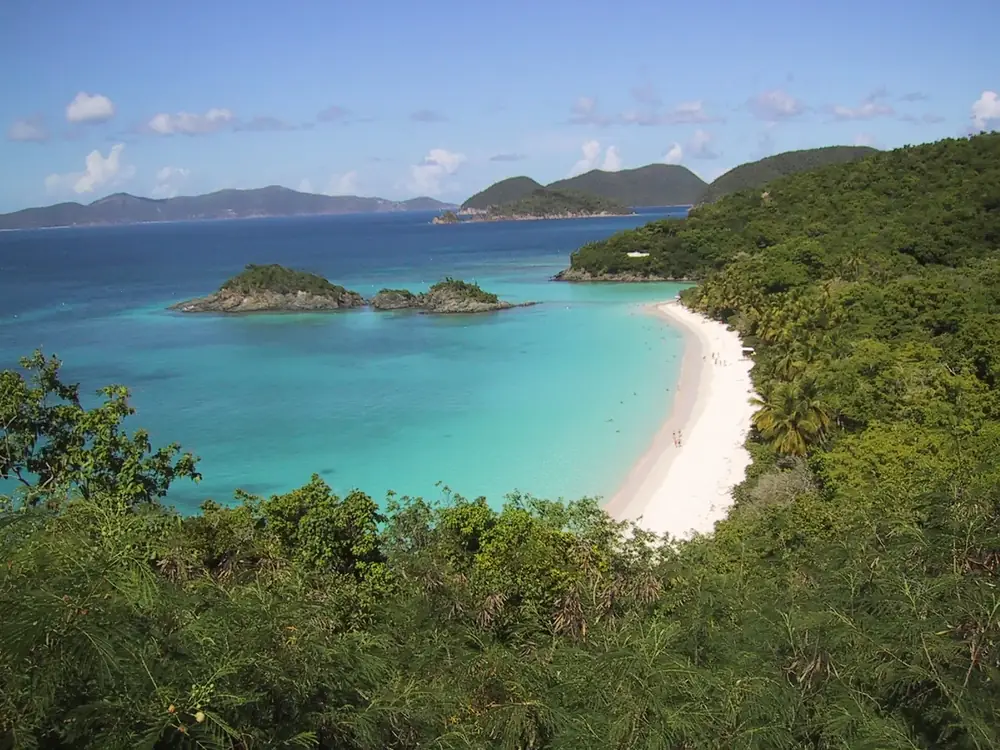
- Trunk Bay: strongest facilities; $5 fee for age 16+; no lifeguard.
- Maho Bay: easy shoreline access and turtle habitat; wildlife sightings are not guaranteed.
- Cinnamon Bay: long beach, campground, and historic trail.
- Hawksnest: close to Cruz Bay and practical for shorter visits.
- Francis Bay: quieter beach and accessible boardwalk.
- Salt Pond: southeastern landscape, hot walk, and access to Ram Head.
What to do beyond the beach
- Visit the Cruz Bay Visitor Center.
- Learn the history of Annaberg and Catherineberg.
- Walk the Cinnamon Bay historic boardwalk.
- Join a guided Reef Bay hike when prepared for the strenuous route.
- Hike Ram Head early.
- Take a USVI boat day or a documented BVI trip.
- Spend time in Coral Bay as a community.
- Drive Centerline Road safely.
NPS describes the guided Reef Bay route as nearly three miles one way and requires participants to be capable of completing the roughly six-mile round trip if the boat return cannot operate.
Get on the water at least once
A boat day is the single highest-value thing most visitors do on St. John. The snorkeling is better from a boat, the crowds disappear, and the island looks completely different from the water.
For booking, we recommend Quest VI. It is essentially the Airbnb for charters in the USVI: all the local options in one marketplace, with the top-rated providers, real reviews, boat details, and pricing side by side, so you can book the trip that fits your group instead of guessing. Guests consistently come back saying it was the best day of the trip. Ask them about:
- A USVI day (no passport needed) around Lovango, Congo Cay, and the north-side snorkel stops.
- A BVI day for groups with valid passport books, accepting customs time and fees.
- A half-day or sunset sail for motion-sensitive travelers, young kids, or an arrival-day group.
Book it early in the trip so weather gives you a second chance, and book it before you arrive in high season.
A sample one-week itinerary
Day 1 — Arrive. Fly into STT, taxi, groceries, ferry, rental pickup, villa orientation. Eat close to where you are sleeping. Do not book anything timed.
Day 2 — North Shore. Trunk Bay or Hawksnest in the morning, Maho late morning, lunch at Drifters on Centerline Road, easy afternoon. See the one-day Jeep route.
Day 3 — Boat day. Full-day charter booked through Quest VI, where the local operators are listed side by side. Keep dinner simple afterward.
Day 4 — Coral Bay and the southeast. Salt Pond, an early Ram Head hike if the group is up for it, Coral Bay in the afternoon.
Day 5 — History and a slower day. Annaberg, Francis Bay boardwalk, Cinnamon Bay, or the guided Reef Bay hike for strong hikers.
Day 6 — Repeat your favorite. Return to the beach that worked, add a short sail or a kayak trip, and have one proper dinner out.
Day 7 — Cruz Bay and departure. Lind Point walk or Mongoose Junction in the morning, then the ferry with a wide buffer before your flight.
Traveling for five days instead? Use our 5-day St. John itinerary.
Budget planning
Costs on St. John are higher than mainland equivalents because nearly everything arrives by boat. Plan realistically for lodging, one rental vehicle per four to five people, a grocery run, one premium activity, and roughly one restaurant meal per day.
The three biggest levers are lodging location, whether you need a vehicle, and how many meals you eat out. Full detail: St. John on a budget.
Visiting in the slow season
Late summer through October is the island's quietest stretch: fewer crowds and lower rates, but also the season when restaurants schedule maintenance closures and reduced hours. If you are traveling then, build a flexible food plan rather than counting on one specific restaurant — see St. John restaurant seasonal closures.
Safety, health, and practical notes
- U.S. cell service works, but coverage drops in valleys and on the East End.
- The USVI uses U.S. currency, U.S. plugs, and U.S. postal service.
- Tap water is often cistern water; ask your host, and buy drinking water if unsure.
- Mosquitoes and no-see-ums are worst at dawn and dusk — bring repellent.
- Emergency number is 911; the island has a clinic, with hospitals on St. Thomas.
- More detail: is St. John safe? and do you need a passport for the USVI?
What to pack
Sunscreen is expensive on-island and selection is limited, so bring it. Add spare sunglasses, a large water bottle per person, an underwater camera, water shoes, and one closed-toe pair for trails. Full list: the St. John packing list.
Where Drifters fits
Drifters is located on Centerline Road at 71 Estate Carolina, approximately 15 minutes east of Cruz Bay. It works naturally after a North Shore morning or during a Cruz Bay–Coral Bay drive. Current hours are 9 AM–6 PM daily, with breakfast served 9–11:30 AM and the all-day menu available from 11:30 AM. On-site parking is generally easier than finding a spot in downtown Cruz Bay.
Best time to visit
- December–April: highest demand and broadest operations.
- May–June: strong balance of availability and lighter crowds.
- Late June–July: cultural events and St. John Celebration period.
- August–October: quietest period, with restaurant closures, reduced schedules, and hurricane-season planning.
- November: transition into winter operations.
Island etiquette
- Stay at least six feet from sea turtles and never touch or chase them.
- Use mineral sunscreen allowed under USVI law.
- Do not launch or operate drones from National Park land or water without written authorization.
- Keep pets off National Park beaches.
- Drive like residents use the roads—because they do.
Keep planning
Frequently Asked
- Does St. John have an airport?
- No. Most visitors fly to St. Thomas and take a ferry.
- Do U.S. citizens need a passport?
- Not for direct domestic travel to the USVI, but a passport is required for most international side trips.
- Is the National Park free?
- There is no general entrance fee. Trunk Bay charges $5 for visitors age 16 and older.
- Can I visit without a Jeep?
- Yes, especially from central Cruz Bay. Transportation becomes less flexible outside town.
More from the Journal
 Island Guides
March 6, 2026 · 3 min read
25 Best Things to Do on St. John, U.S. Virgin Islands
Discover 25 worthwhile things to do on St. John, from beaches and snorkeling to historic ruins, hikes, boat trips and local neighborhoods.
Read the story Island Guides
February 27, 2026 · 3 min read
The Best Beaches on St. John: A Complete Visitor’s Guide
Compare the best St. John beaches for snorkeling, families, facilities, turtles, hiking and quieter beach days in Virgin Islands National Park.
Read the story Island Guides
February 20, 2026 · 3 min read
Where to Stay on St. John: Cruz Bay, Coral Bay or Somewhere Between?
Compare Cruz Bay, Coral Bay, Great Cruz Bay, mid-island villas and Cinnamon Bay to choose the right St. John accommodation area.
Read the story Island Guides
February 13, 2026 · 3 min read
How to Get Around St. John: Jeep Rentals, Taxis and Island Transportation
Compare St. John rental Jeeps, taxis, VITRAN buses, ferries and walking, with current 2026 fares, routes and local transportation advice.
Read the story