

The St. John Hiking Trails Worth a Morning — Reef Bay, Ram Head, and More
Six trails ranked by what they give back — canopy walks, cliff-top views, and the one hike that ends at a hidden beach.
· 6 min read · The Drifters Team
St. John's national park protects more than sixty miles of trail, most of it hikeable in under three hours and almost all of it under the tree canopy — which matters when the Caribbean sun is at full volume. This is the shortlist of St. John hiking trails worth building a morning around, and the ones to skip when the weather turns.
Bring more water than you think. The trades keep you cool enough that you don't notice you're sweating out a liter an hour until you're back at the trailhead and dizzy.
Six trails, ranked by what they give back
- Reef Bay Trail. The famous one — 2.4 miles down through rainforest to petroglyphs and sugar-mill ruins on a hidden beach. Hard part is the climb back out. Half a day, easily.
- Ram Head Trail. A 2-mile round trip out to a dramatic southern point, cliffs on all sides. Full exposure — do it before 9 a.m. or after 4 p.m.
- Lind Point Trail. Starts right in Cruz Bay, ends at Honeymoon or Salomon Bay. About 45 minutes each way. Best "hike + swim" combo for a short day.
- Bordeaux Mountain Trail. A little over a mile through rainforest, top of the island. Cooler than anywhere else on St. John.
- Cinnamon Bay Nature Trail. Half a mile loop, interpretive signs, good for a first day or with kids.
- Peace Hill. Barely counts as a hike — ten minutes uphill for a ruined sugar mill and a sunset view over Denis Bay.
How to actually hike a St. John trail well
- 01
Start at 7 a.m., no later than 8
Trails get uncomfortable by mid-morning. Sunrise starts are dreamy; noon starts are a mistake you only make once. - 02
Trail shoes, not flip-flops
Rocks, roots, and mongoose burrows are real. Even the "easy" trails have footing that punishes sandals. - 03
Two liters of water minimum
Refill in Cruz Bay before you go. There's no water on the trails, and it's not a place to be dehydrated. - 04
End with elevation, not sea level
After a beach-descent hike like Reef Bay, the last thing you want is another beach. Come up to 760 ft for cool air and a shot of turmeric — your legs will thank you.
Weather and season
Best months: December through April — cooler, drier, breezier. Summer trails are technically fine but you'll sweat twice as much and the bugs are more present.
When the trail ends, the deck is waiting. See our menu for the after-hike lineup, and if you're planning the whole day, our first-timer's guide covers the ferry, the driving, and the sunset that closes the loop.
Frequently Asked
- What is the most popular hike on St. John?
- Reef Bay Trail — 2.4 miles down through rainforest to petroglyphs and sugar-mill ruins on a hidden beach. It's the marquee hike in Virgin Islands National Park. The climb back out is the hard part.
- Are St. John hikes hard?
- Most are moderate. Reef Bay is the exception — it's a serious climb back up. Ram Head is short but fully exposed. Lind Point, Cinnamon, and Peace Hill are easy for any fitness level.
- What should you bring hiking on St. John?
- Two liters of water per person minimum, real trail shoes (not flip-flops), reef-safe sunscreen, and a small dry bag. There is no water on any of the trails, and the sun is stronger than most visitors expect.
- Are there guided hikes on St. John?
- Yes — the Virgin Islands National Park runs guided ranger hikes seasonally, including the classic Reef Bay descent. Check the park's schedule at the Cruz Bay visitor center on arrival. Self-guided hiking is straightforward on marked trails.
- When is the best time to hike on St. John?
- December through April — cooler, drier, breezier. Start any hike by 7 or 8 a.m. year-round; trails get uncomfortable by mid-morning even in winter.
More from the Journal
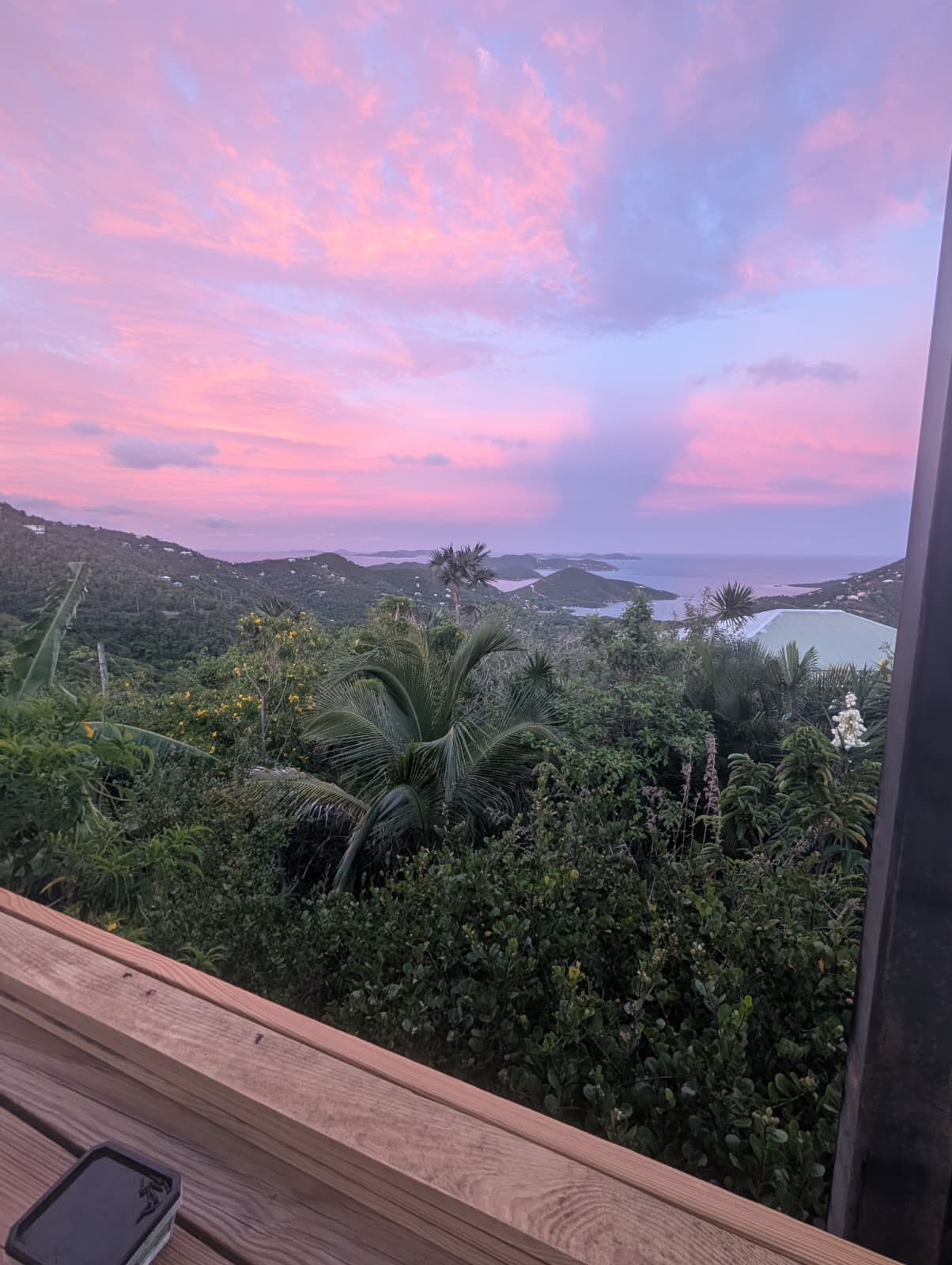 Place & View
July 21, 2026 · 6 min read
The Best Beaches on St. John — and Where to Eat Right After
Five beaches worth planning a St. John day around, each paired with the food stop that makes the day actually work.
Place & ViewSeptember 8, 2026 · 6 min read
The Best St. John Snorkeling Spots — Paired with Where to Eat After
Five snorkel bays worth a morning — Trunk, Maho, Waterlemon, Salt Pond, Hawksnest — plus the elevated stop that closes the day.
Kitchen & BarJuly 14, 2026 · 5 min read
The Wellness Shot, Honestly: Turmeric, Ginger, and Why We Pour Four
What's actually in a turmeric-ginger shot, what the research does and doesn't say, and when to order one on St. John.
 Island Life & Legacy
October 6, 2026 · 5 min read
What to Pack for St. John, USVI — After Watching Thousands of Visitors
The five things everyone forgets, what you can leave home, and the one splurge worth making before your flight.