
A Rainy Day on St. John — What Locals Actually Do
How to read a St. John squall, when to wait it out, and why the ridge in a passing storm is one of the island's quiet gifts.
· 5 min read · The Drifters Team
St. John rains. Not all day, almost never all week, but reliably in fifteen-minute bursts that reset the palms and then vanish. Visitors who planned for perfect weather see the first squall roll over the harbor and panic. Locals check the radar and pour another coffee. This is the honest guide to a rainy day on St. John — how to read it, what to do, and why the ridge actually gets better when the sky turns.
Read the sky before you rearrange the day
Most St. John rain is a passing squall — a dark bank moves in from the east, drops water for ten to twenty minutes, and moves on. Full rainy days happen, usually September through November, but they're rare. Before you cancel a beach plan, look east: if you can see clear sky behind the clouds, wait it out under a covered porch. It'll be over before your coffee is.
What to actually do when the rain sticks
If the sky commits — you can see rain wrapping the whole island — here's the local play:
- Long Cruz Bay lunch. The town has enough covered restaurants that you can eat slowly for two hours and outlast most weather.
- National Park Visitor Center. Small, free, actually interesting. Good for an hour with kids.
- A drive up Centerline. The rainforest sections above Bordeaux are magical in a mist — top down on the Jeep if you're brave.
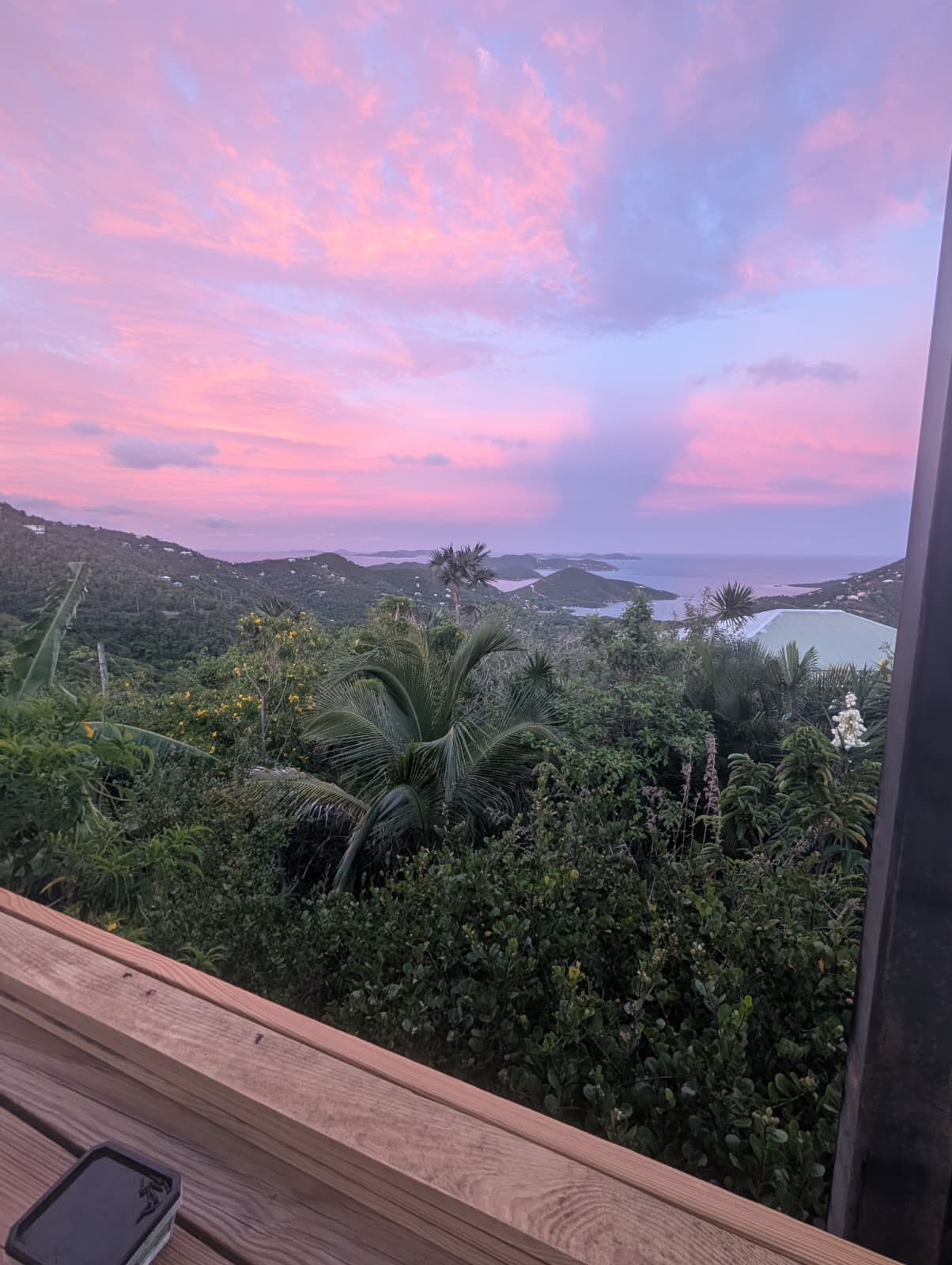
- The covered deck at 760 feet. Our roof is designed for exactly this — the storm rolls under you, the temperature drops ten degrees, and the view somehow becomes more dramatic, not less.
The rainy-day case for elevation
A ridge in a passing squall is one of the best free shows on the island. You watch the rain crossing the channel toward St. Thomas, see the light break behind it, and if you're lucky you catch a rainbow between the two islands. Most visitors don't know to come up in the rain. Locals do.
“The best weather on St. John isn't always the sunniest. Sometimes it's a fifteen-minute squall that lets everyone slow down and remember they came here to stop rushing.”
What a rainy day actually gives you
The trip you planned expects sun. The trip you'll remember probably includes a rainy afternoon on a covered porch with a good drink and someone you love. Let it happen. St. John rewards visitors who let the weather set the pace instead of fighting it.
When the sky opens and you want to be somewhere covered and beautiful, we're eight minutes above Cruz Bay — directions here. See the menu, or if you're still assembling the trip, our first-timer's guide covers day-planning at every weather level.
Frequently Asked
- Does it rain a lot on St. John?
- Not compared to what most first-timers assume. Rain comes in fast-moving squalls, usually 10–20 minutes, then clears. Full rainy days happen — mostly September through November — but they're a small minority of the year.
- What is there to do on St. John when it rains?
- Long Cruz Bay lunches under cover, the National Park Visitor Center, a scenic Centerline drive through the rainforest, and covered hilltop decks like Drifters at 760 ft (where the storm actually rolls beneath you). Rainy days are among the island's best-kept secrets.
- Is there a hurricane season on St. John?
- Yes — official Atlantic hurricane season is June 1 to November 30, with peak activity August through October. Storms are rare but possible; check NHC forecasts if you're traveling in that window.
- What's the rainiest month on St. John?
- September and October, both around 6 inches of rain on average. February–April are the driest, typically under 2 inches per month.
- Do restaurants stay open when it rains on St. John?
- Yes — most restaurants have covered seating designed for the passing squalls. Beach bars might briefly close outdoor sections; hilltop restaurants and Cruz Bay indoor spots continue normally.
More from the Journal
 Place & View
July 28, 2026 · 6 min read
Cruz Bay Restaurants: A Local's Way to Actually Pick One
How to think about where to eat on St. John — quick lunch, sunset, date night, or family — and where Drifters actually fits.
 Place & View
August 11, 2026 · 5 min read
How to Get to Drifters — Directions the Locals Actually Use
The eight-minute drive from the Cruz Bay ferry to Drifters at 760 feet, in the landmark version locals give when you ask.
 Kitchen & Bar
October 27, 2026 · 5 min read
Caribbean Cocktails at 760 Feet: The Drifters Bar Program
The five signature cocktails at Drifters — the thinking behind each pour, and when to order which.
 Island Life & Legacy
October 6, 2026 · 5 min read
What to Pack for St. John, USVI — After Watching Thousands of Visitors
The five things everyone forgets, what you can leave home, and the one splurge worth making before your flight.